

Public Land ≠ Public Knowledge.
Protecting The Things We Love

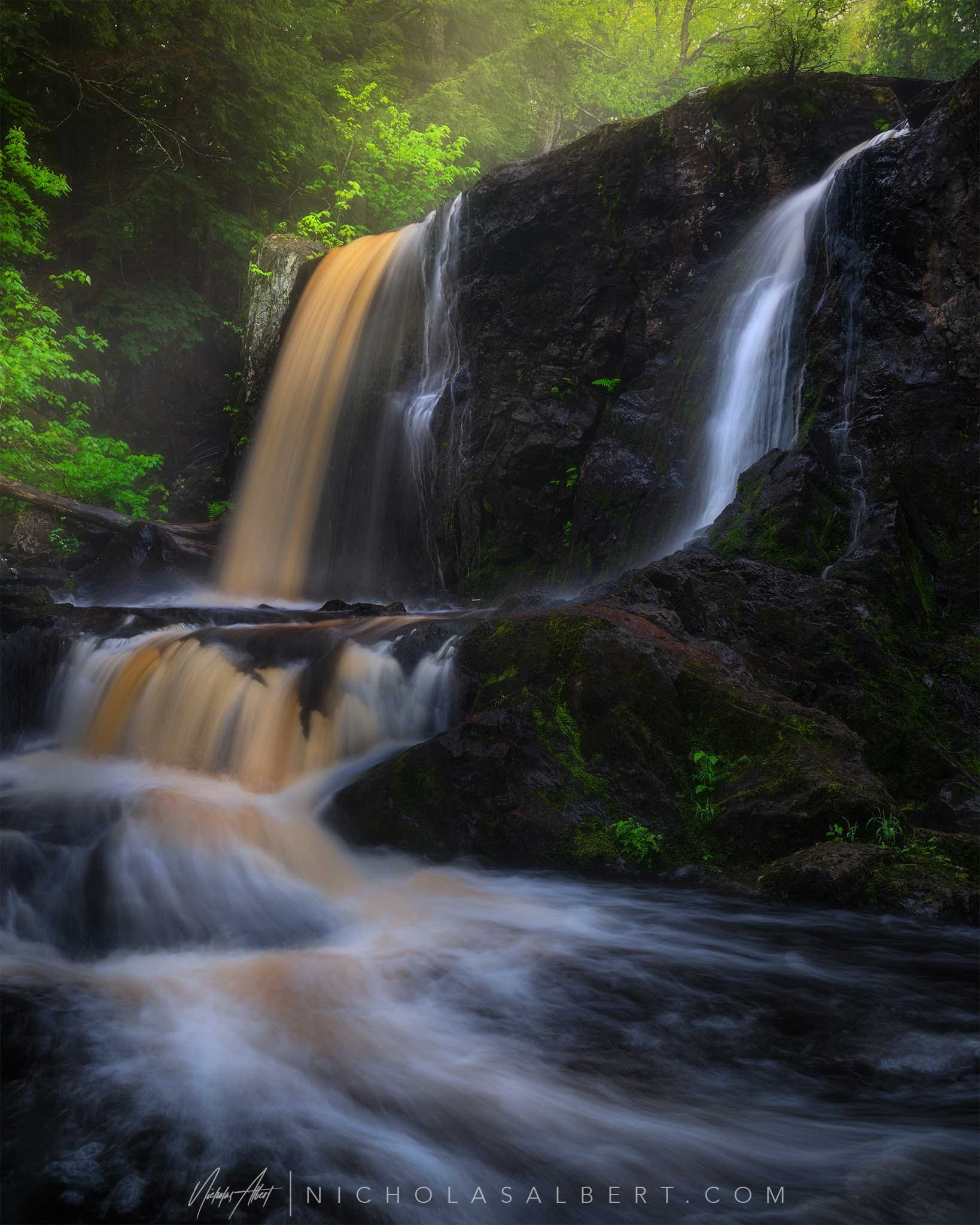
Beautiful shot! Where is this?
If you’ve shared a photograph online in the last few years, you’ve probably seen some version of that message. We live in a time where the answer to almost anything is just a quick search away. Recipes, driving directions, gear recommendations, you can type a few words and the answer is immediately available.
That expectation has quietly crept into everything, including how we experience the outdoors. And it’s changing the way we treat the places we love.
INSTANT ANSWERS
Over the last decade, we’ve gotten used to skipping the hard part: the effort, the research, the time. We expect the answer now. For photographers and outdoor enthusiasts, that shows up as location requests.
On the surface, it sounds harmless. But behind a single GPS pin is a lot of effort and impact that most people never see. When I find a location I care about, it’s not an accident. It’s time off work, time away from family, hours of desktop recon, studying maps and trip reports, and usually multiple failed attempts. It might even involve a rough road, a risky river crossing, or hiking through dangerous areas.
By the time I finally get the shot under the conditions I hoped for, that photograph isn’t just pixels. It’s the sum of every decision, every early alarm, every “try again next time,” and every quiet, defeated drive home.
GATEKEEPER!
You finally get the shot you hoped for, and you share it online. Almost immediately, the messages start rolling in. “Where is this exactly?” You respectfully decline to share the precise location, and suddenly you are unfollowed, called selfish, and accused of gatekeeping.
This is a strange place we’re in right now. Share the location and risk it being overrun, trashed, or unsafe for people who do not know what risks are actually involved. Or protect the place and face backlash from people who feel entitled to an answer.
All because a super-connected world has conditioned us to believe that if something is online (especially if it’s on public land) we’re owed instant access.
PUBLIC LAND ≠ PUBLIC KNOWLEDGE
The most common argument I hear is: “These are public lands. I’m entitled to know where this is!”
No, you are not. You have the right to visit public lands. You’re not entitled to my time, my research, or my efforts. The work I put into finding a place is part of the experience. You’re capable of the same process.
The response is usually, “I don’t have the time or access to do all that research. I’ll never find this. You’re ruining it for people like me.”
Here’s the hard truth: if you are not willing to do the research, you are not ready for the adventure. Some people are asking for an experience they are not actually prepared to have. Many of the spots I visit require off-roading in a capable vehicle, hiking through rough, uneven, dangerous terrain, and far worse. Accepting actual risks: no cell service, extreme weather, difficult routes, long hikes.
Just because you have boots and a Jeep does not mean you have the ability to go anywhere and do anything. There are genuine risks involved in everything we outdoor enthusiasts do. I have been hurt. Friends have been hurt. In 2024, I hurt my back so badly that I could not walk properly for seven months. The year before that, I needed surgery to repair another hiking-related injury. Nature is unforgiving, and the risks involved have very real consequences.
Treating it like a trip to the grocery store can end badly for both you and the place.
THIS IS STEWARDSHIP, NOT GATEKEEPING
I’ve seen what happens when a lesser-known location goes viral. Within a year, trash piles up, people trample plants into dirt, and spray paint covers rocks and trees. Land owners close it to the public, and they deny everyone access. All because people shared directions faster than they showed respect.
So when I choose not to share a location, it isn’t about “I found this first.” It is about protecting fragile places from too many visitors. Sure, not everyone has nefarious intentions. But once something is out there, there is no stopping who gets access to it. You might have good intentions, but the people you share it with provide it to others, and eventually the information will find someone who does not.
More importantly, I want to keep casual visitors safe from dangers they may not realize are involved. Avoiding unnecessary search and rescue efforts or backwoods vehicle recoveries. It is not my place to judge another’s ability, and I don’t. However, it is reckless to assume that everyone has the required skill set and ability, too. It is easier and safer to keep some locations away from public knowledge to avoid the risk altogether.
DECIDING WHAT TO SHARE
Sometimes, it is appropriate to share a location. When it is a well-known overlook, trail, or landmark that’s already public knowledge, I share it. These locations typically have the infrastructure needed for crowds (parking, signs, restrooms, marked trails) and are not dangerous to access. If it meets this baseline, I include where I was.
When the spot is off-trail, fragile, or easily damaged, I don’t share the location. If access involves actual risks like exposure, water crossings, intense off-trail navigation, or no cell service, I don’t share it. If it is a place that can’t handle a sudden surge of visitors without being damaged, you guessed it; I don’t share it.
That simple filter helps me stay consistent: it’s not about who’s asking, it’s about whether the place can handle increased popularity, and how safe it is to access for the public. Recovering stuck vehicles and people who got lost happens way more frequently now than at any other point in history. We can help slow that down with a little forethought and discernment.
OWN YOUR DISCOVERY
One thing I want to make sure I am very clear on is this; I am not trying to be elitist. Nature is for everyone, and I genuinely want people to experience the joy of discovering the wilderness. I just want them to own the discovery piece.
So when challenges come up and accusations of gatekeeping flood the comments, I turn to sharing resources. I am happy to suggest guidebooks, maps, trail systems, general regions, and recommend authors who know an area well. I have no issue sharing how I use those resources either. Reading maps, watching the weather, scouting for access points, or even planning safe routes.
These are the things that we want to share with others to help them learn and build confidence to get out there and find these places. We all started somewhere, and not sharing that aspect is gatekeeping.
What I am not willing to do is blindly share a GPS pin with anyone who asks. And you know what? That is ok. No is a perfectly acceptable response. You are not obligated to share. It is not a choice made in malice, it is a conviction made in stewardship.
THE WAY FORWARD
So what do we do in a world addicted to instant answers? We choose discovery. When someone asks for a pin, we redirect. “I don’t share exact locations, but here’s the area and a great resource to get you started.” Or if safety is a concern, “This spot requires traveling on a dangerous two-track, and is located in a very remote area with no immediate access to help.”
We keep protecting what we love, even if it means losing some followers or making people upset from time to time. We accept the backlash as the cost of doing the right thing. Because in the end, the real magic isn’t in standing where someone else stood. It’s in following your curiosity, putting in the work, and arriving at your own version of that moment - your own reality, defining your own connection to a place.
The journey is the destination. You don’t owe your journey to anyone.
God Bless.
I am right there with you. The only time I share specific locations is when it is already as popular location or if the person who is asking is someone I know and trust with that information. If anyone feels entitled about location and gets upset about me not sharing a) that’s their own internal demon, not mine and b) that reinforces to me that they are not willing to protect the place…which actually makes me feel better about my decision.