

From Algorithm to Authenticity: The 2025 Reset.
Stop performing. Start seeing.

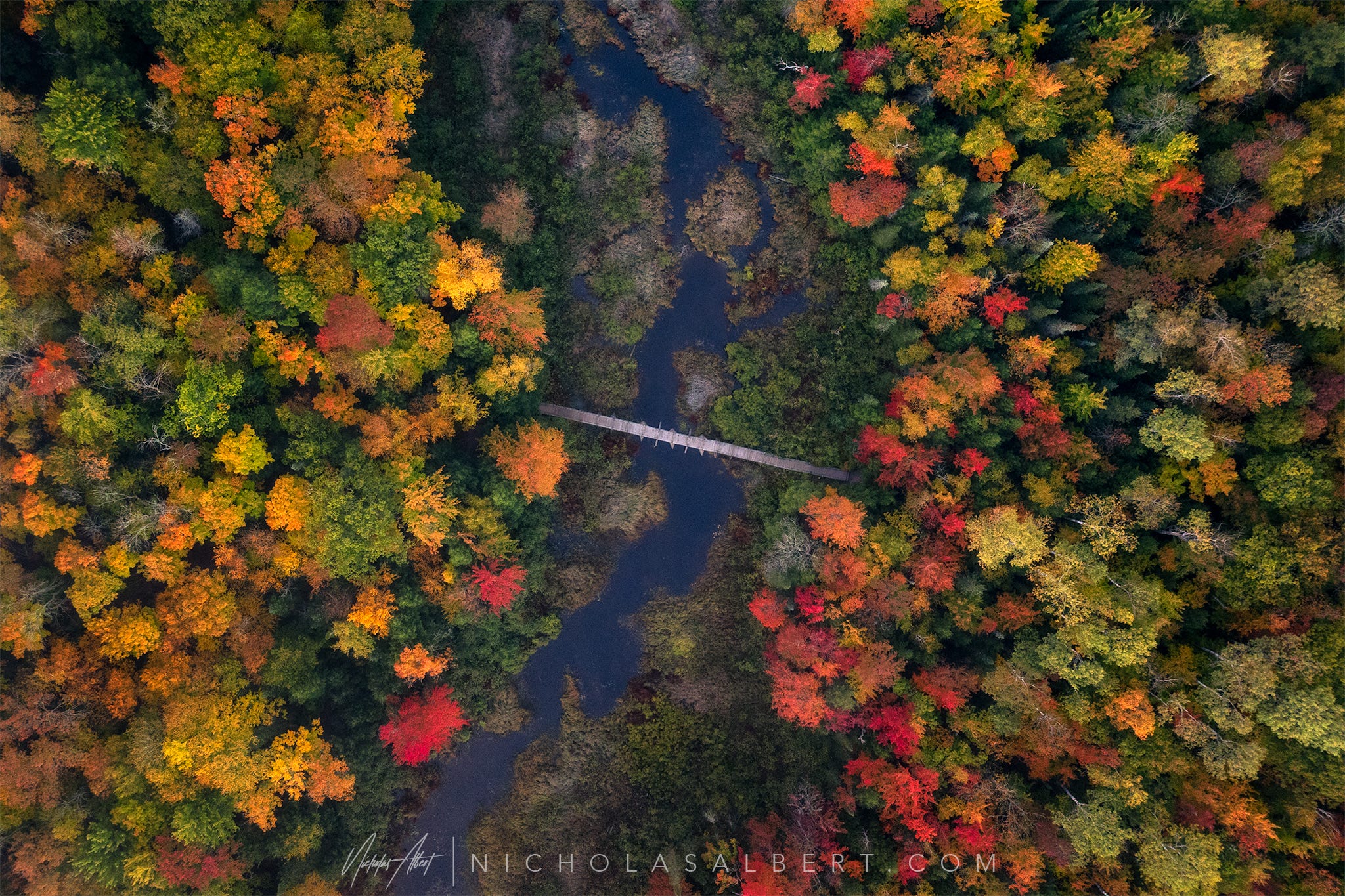
Night settled in at Canyon Falls in Michigan’s Upper Peninsula. I watched the mist rise into the treetops as a cool breeze raced up the river and met me against the damp canyon walls. The water rippled and swirled before me, then crashed over the falls on its way downriver—swirling, tumbling, tossing without control.
That evening, I didn’t take a single photo. It was one of those times when I intentionally left my pack behind, it was an opportunity to connect with the landscape instead of trying to capture it. The light faded from the sky as the forest darkened around me, illuminated only by my headlamp. Sitting at the base of the waterfall, I reflected on my year and faced the hard truth: I was no longer there to discover; I was there to produce. Somewhere between performing for social media and trying to be authentic, I stopped seeing.
That night I made a choice that transformed my year. I realized I had been emphasizing photos that would perform on social media over photos I actually enjoyed taking. I thought back to the days before social media existed, how peaceful photography felt back then, and I knew it was time to head home to that part of myself. No more missed moments, creative anxiety, or shallow work. I decided I wasn’t playing the algorithm game any longer. I craved authenticity.
The loop is subtle at first. Your photo gets more likes than average. Dopamine. The next flops and gets very little interaction. Cortisol. You plan a trip to do it better. Dopamine. You get there and stress takes over because you don’t want to flop again. Cortisol.
Without warning, you eventually find that you are stuck in that cycle. I caught myself stressing about post times and engagement instead of interpreting what I enjoyed about the photograph. As soon as a post went live, I was checking metrics. In the field, I was seeking the “performer” scene, not my interpretation of the landscape before me.
Photography was no longer what it once was to me, and that needed to change. I wanted the connection I once had with my work back. Authentic, genuine, and true to myself.
This is how I stepped away, and how you can too.
FROM ANXIETY TO AUTHENTICITY
If you take one thing from what I’m about to say, remember this: chasing trends and algorithms is a terrible compass. The moment you worry about the outcome or how it will perform, how others will receive it, you’ve already shifted your attention away from the work itself.
When you worry about the outcome, your work becomes rigid and forced, and the photograph carries that tension. You distort your creative vision to serve whatever is trending this week instead of focusing on what you actually want from your work. You will never find your way home if you follow someone else’s map. The imagined expectations of others made me question every decision I made in the field. I was performing instead of producing. I know I’m not alone in that.
So how do we escape it? In a strange way, the solution is simple: stop trying so hard. Don’t become paralyzed by whether it’s “good.” If you let “good” stop you, the learning stops with it. None of us started out making award-winning photographs. Do you think Ansel Adams nailed Moonrise, Hernandez on his first day? Of course not. He got there through his own process—through repetition, failure, refinement, reflection, and time. The point isn’t to meet someone else’s expectations. The point is to build your own.
Here’s the thing: I want distinction in my photographs as much as the next person. But realizing that distinction doesn’t come from the opinions, rules, or standards of others is the key to becoming free. Conforming to what other people expect from art isn’t being true to yourself. “Good” has to be personal, that’s where it actually exists.
The only way to reach your vision is through trial and error. Learn your craft, study those who have mastered it, and practice new techniques and approaches. Find what you like and ignore the rest. As you do that, skill improves, creativity grows, and what inspires you evolves into something that looks like you. “Good” isn’t a state of being. It’s the act of following what you feel when you find what you love. All you have to do is make something, anything you connect with that means something to you.
This is where real milestones come from. Not random rules you’re following because someone said so, but choices you made because you noticed something in your own work and wanted to improve it. Crooked horizons. Critical sharpness. Shutter speeds. Camera height. These might be “common” ideas, but when you notice the problem for yourself and take action, they become personal. Now you know why you’re doing it. That’s discovery.
As you progress, you’ll run into new roadblocks. Technical ones, creative ones, even gear-related ones. You’ll look back and think, “If I had done X differently, I could’ve achieved Y.” That’s not failure. That’s the beginning of your journey to becoming intentional. It’s looking at your work and taking issue with something, then taking action to improve. Not comparing yourself to other people, and not chasing the hope of going viral.
The secret is having a problem to solve. If you watch a video or read a book and think, “That’s a great idea,” but you don’t know what problem it solves for you, you’ll end up confused and frustrated. You’ll end up doing extra steps because someone else said to, and many of them may have nothing to do with what you actually want to achieve.
Growth comes from identifying what you want to improve, where it shows up, and experimenting your way toward a solution. But it has to be yours. Anyone can say f/11, tripod at this height, use this lens—that’s their process. It might contain something that helps you, but you still need a “why” that’s personal, not imagined, not borrowed, and not built around a trend.
All of this happens because you want something different from your own work. That desire pushes you to explore, discover, and improve in ways that actually benefit you. In the process, you learn. You grow. You build a foundation one small choice at a time. Your style, your approach, what makes your work yours. We should seek personal growth, not validation.
Validation is unstable. You find something you love, and you capture it to the best of your ability. Trusting your process, you share it with the world, and it flops. What then? If we are only chasing validation, we end up questioning ourselves. You question why you loved it. You doubt your vision, your process, and it pushes you right back into “follow the leader.” The worst thing you can do is abandon yourself and your style for the safety of the status quo.
When you seek approval from yourself, you grow in a way that isn’t dependent on things outside your control. It doesn’t matter whether others receive it well because you know you loved creating it. You know you improved from the last attempt. And that’s what matters. We have to mark our journey with the little victories: getting a composition right, identifying good light, discovering a favorite shutter speed, solving a problem we’re actually having. It has to be personal, and it has to solve a problem we had with something in our own process. That is meaningful growth.
BECOMING YOU
That’s where I found myself. I was never stuck; I was transforming. My problem to solve wasn’t light, composition, or gear. I was chasing performance instead of what I wanted. Between being a performer and a photographer, I found myself in a strange place. But once I admitted it to myself, I could finally do something about it. I could choose differently.
I found freedom in a new creative land that was mine to discover. Trips were no longer about needing to produce work at any cost, and I stopped worrying about whether my work would be well-received. Soon, I began asking the right questions again: what do I actually enjoy about being here, creating this? As I stepped away from algorithmic thinking, I found my way back to discovery. I wasn’t overthinking everything; I was present again.
Those learning moments became benchmarks in my work. Not because they were perfect, but because they were mine. That 14-year-old version of me showed back up. The one with a backpack full of film and endless curiosity, the one who didn’t need to “win” anything to feel fulfilled. That’s when I realized the answer to my problem: the joy comes back the moment you stop asking the internet for permission to love what you’re making. Not every effort works out, and that’s completely fine. That’s just the nature of it. You try, you learn what didn’t work, you adjust, and you try again. Not because the algorithm denied you, but because you are actively identifying and solving problems you notice in your work.
If you want to do the same thing, here is what helped me. Create first, share later. Spend some time with your work before you share it with the world. Let a photo sit and marinate a bit. Come back to it a few times and ask yourself what you feel about it. If you genuinely love it, it is worth keeping whether you share it or not. If the answer is no, ask yourself why. Is it in the processing, or is it something you need to change in the field? Note what you want to improve and remind yourself of that the next time you are in the field. Rely on growth in your own process, not performance.
There is no better reason to make art. It has to come from your heart, from a place that only you can visit. You can share little pieces of that place through your work, but the work itself has to belong to you first. I’m not always sure if what I make is good, or art, or exceptional, but I know when it’s honest. I know when I loved creating it. Most importantly, I know when the process feels like discovery again. That’s enough for me.
That’s the art of becoming intentional—becoming you. And the beautiful thing is, your standard will evolve as you grow. Your taste will change. Your skills will improve. New problems will appear, and you’ll solve them in your own way. Not because a trend told you to, not because the algorithm did not pick your number that day, but because you’re building something that reflects what you see and how you feel and you’re willing to take the steps and risks to get there.
So stop worrying. Stop doubting. Pick up the camera and get outside. Practice. Experiment. Make photographs you love, embracing your own process and allowing your vision and voice to guide you, even if they’re not the ones you think will perform. Incorporate the little learnings along the way, and sooner than you think, your work stands on its own.
Nobody can beat you at being you, so live like it.
Have you felt the push to perform instead of discover? You are not alone. Share your experience below!
I so get this and in my retirement from corporately owned journalism forever, Nature art photography is my way of expressing me — just me.
If I sell something, fine but I do not create for others to like or whatever; I create for me.
When others find peace in looking at my art, that is my exterior reward.
My ultimate reward is knowing I have given a composition my all — that is what really matters, to me.